

Tatra Banka is the 10th fastest-growing brand in search results
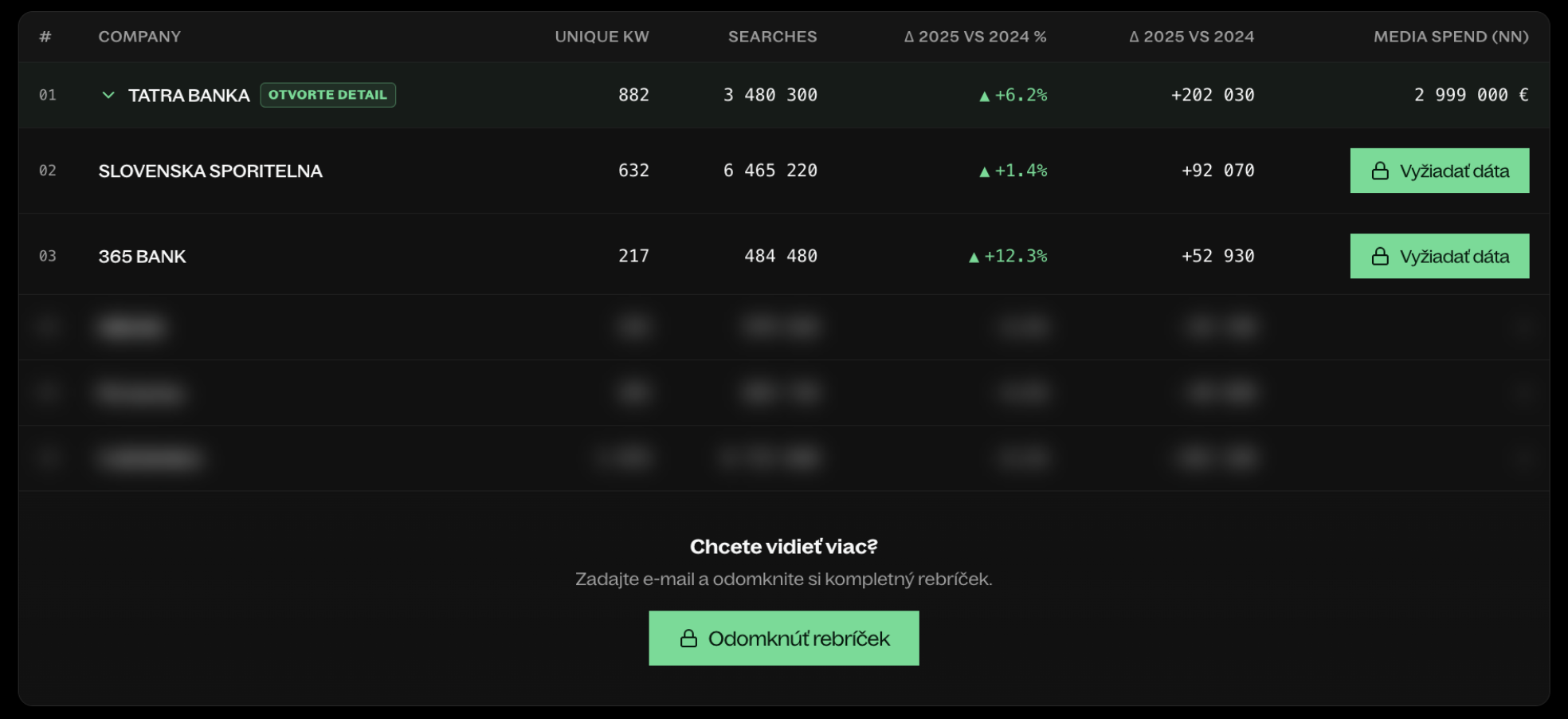
Tatra banka is the 10th fastest-growing brand in search with an absolute increase of 202,000 searches (+6.2%). However, the increased search volume may also be linked to legislative changes.
The main theme of last year's March TV campaign was accounts for sole traders, through which Tatra banka sought to capitalize on the increased demand for this type of product following the introduction of new legislation that required sole traders to maintain separate business accounts.
The banking market stagnated in 2025 (-0.29%)
365 banka saw the most dynamic growth (+53,050 / +12.29%). Mbank, Fio banka, and VÚB banka saw a decline.
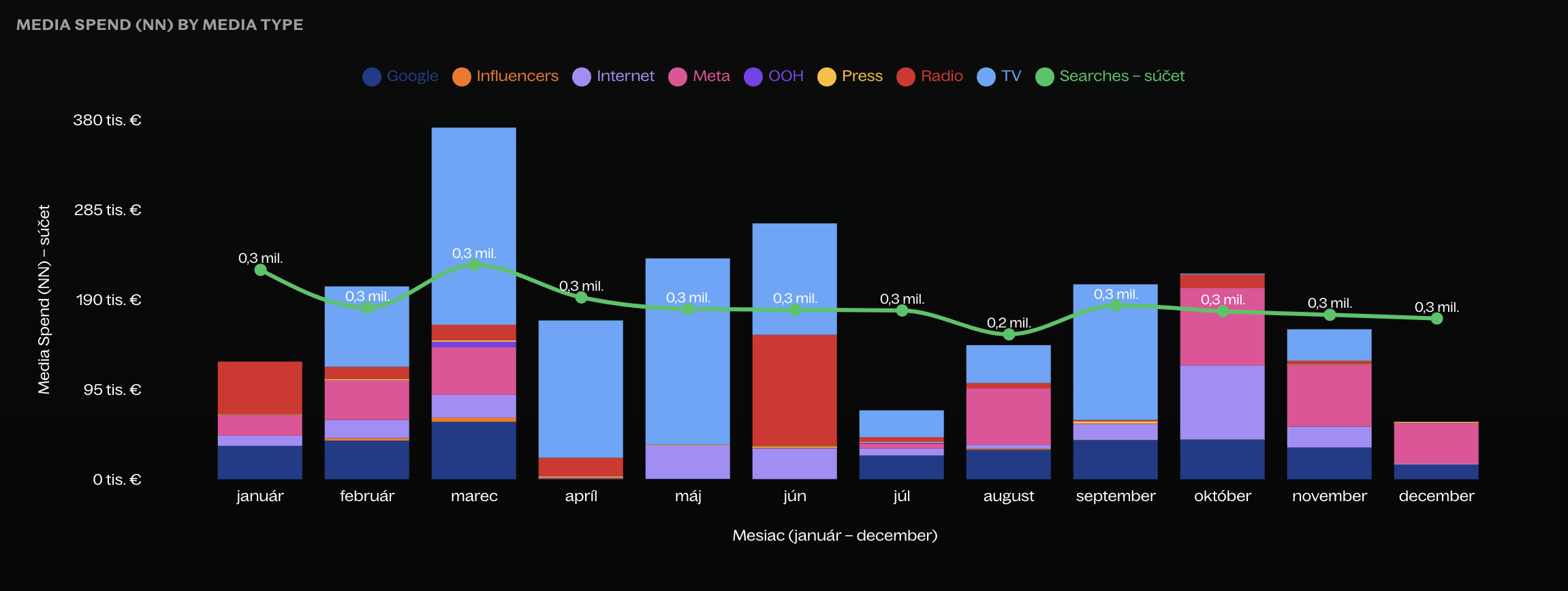
Tatra banka bets on a combination of TV (39%) + online (57%)
Tatra banka recorded nearly 100% growth on its main brand keyword, which points to an increase driven by an above-the-line campaign. This is also confirmed by the rise in media spending on TV, where Tatra banka invested 236,000 more (+25%) in 2025 than in 2024.
Expert opinion from Tomáš Mladý (Head of Digital Media)
We estimate that Tatra banka invested approximately €1.3 million in Meta and Google. The budget is distributed relatively evenly, with a slight preference for Meta, which receives about 56% of the investment. Digital is set up primarily for performance, website traffic, and supporting specific product campaigns.
On Meta, conversion campaigns accounted for 64% of the budget, traffic campaigns for 33%, and reach for only 3%. Meta therefore functions primarily as a channel for driving people to the website or toward a specific action, rather than as a pure awareness channel.
On Google, search dominates with a 48% share, complemented by display at 33% and video at 19%. Search is used mainly to capture existing demand for banking products. The largest portion of the search budget went to the campaign for sole trader accounts. Investments are managed tactically throughout the year.
The strongest period was August to October, with a secondary increase from March to April. Lower spending in May and June suggests that digital planning is closely tied to product campaigns and business priorities.